
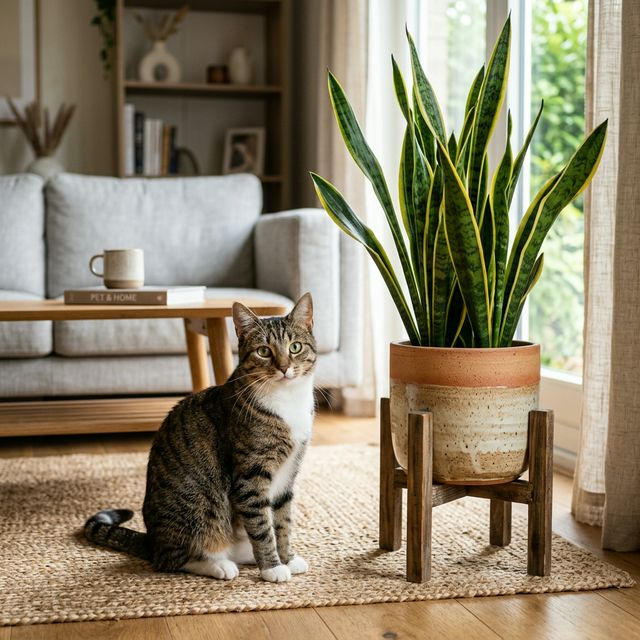
The plant that helps humans breathe cleaner might not be suitable for homes with inquisitive cats.
Key Takeaways
- Know the risk. Snake plants are toxic to cats (per the ASPCA).
- Prevent exposure. Keep it out of reach or remove it.
- Give a safe alternative. Offer cat grass so they have something they can chew.
- Go cat-safe. Switch to non-toxic plants if you want zero stress.
- Watch for symptoms. Drooling, vomiting, diarrhoea, lethargy.
- Act fast. Call your vet if needed.
- Stay calm. Most cats recover well with quick care.
There’s a reason snake plants are everywhere. They are practically indestructible and look stunning with their tall leaves. But if you share your home with a curious feline, that popular snake plant might come with a hidden risk you need to know about. If you’ve ever caught your cat eyeing those sword-like leaves, you’ve probably wondered, ‘Is this actually dangerous?’
The short answer you really want to know? The answer is ‘yes’. Snake plants are toxic to cats. Now panic might begin if you have already bought it or are willing to buy it? But don’t panic as we are here to turn a scary moment into a manageable one. Let’s understand what that really means, what to look for and what to do about it.
Toxicity of Snake Plants to Cats
That beautiful snake plant on your shelf – scientifically known as Dracaena trifasciata (you might also hear it called mother-in-law’s tongue) – contains a natural chemical defence called saponins.
Think of saponins as the plant’s built-in security system. This name comes from the Latin word for “soap” because, well, these compounds create a soapy, foamy texture. For a plant, this is a great way to taste terrible and keep animals from eating it.
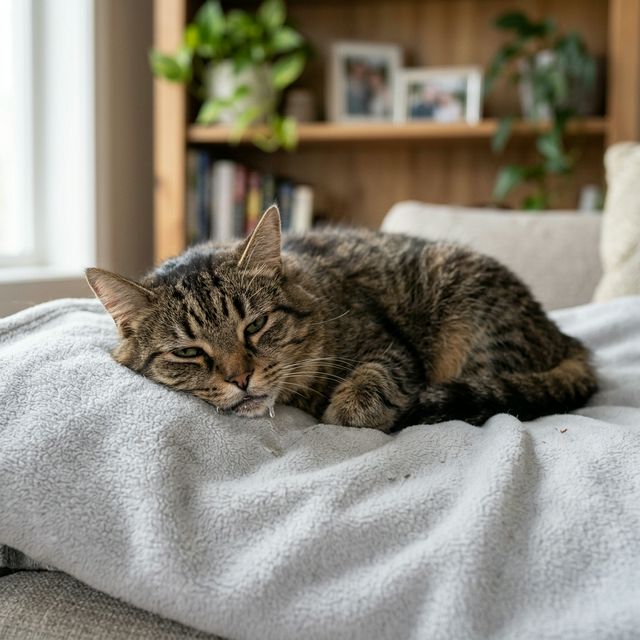
But for your cat? Those saponins are a direct irritant. When your cat takes a bite, the saponins interact with the delicate mucous membranes in their mouth, stomach and intestines. This irritation is what leads to all those unpleasant symptoms like drooling and vomiting.
In more serious cases if a cat really eats a large amount then these saponins can be absorbed into the bloodstream and start a process called ‘haemolysis’ (breaking down red blood cells). While haemolysis is rare, it’s a serious complication that can lead to anemia. Though rare, why take such a risk to your lovely, naughty, pretty kitty?
Symptoms of Snake Plant Toxicity in Cats
If your cat has nibbled on a snake plant, symptoms usually show up within a few hours. Keep an eye out for these signs:
Early Signs (the “something’s not right” stage):
- Excessive drooling (hypersalivation): This is often the first clue. If your cat starts drooling way more than usual, it’s a sign their mouth is irritated.
- Pawing at the mouth or lip-licking: They’re trying to get rid of that unpleasant burning sensation.
- Nausea: You might see them swallowing repeatedly or acting restless.
Moderate Symptoms (“the time to call the vet” stage):
- Vomiting: This is the most common symptom. It’s your cat’s body trying to get rid of the toxins.
- Diarrhoea: The gastrointestinal irritation continues its way, though.
- Loss of appetite: Your usually food-motivated cat suddenly turns their nose up at dinner.
- Lethargy: They seem unusually tired, hiding more, or just not themselves.
What to do if your cat eats a snake plant?
If you find a nibbled leaf or witness your cat taking a bite, here’s your game plan. Staying calm is the first and most important step.
- Remove the plant (and the cat). Immediately move your cat away and snap a quick photo of the plant to show your vet.
- Check their mouth. Gently look inside to see if you can spot any leftover plant bits or fibres and carefully remove them. Do not try to make your cat vomit as it can sometimes do more harm and should only be done by a vet.
- Call for backup. Contact your regular vet, the nearest emergency animal hospital, or a pet poison control hotline.
How To Keep Your Cats Safe from Snake Plants?
The best cure is always prevention. If you have a cat that’s a known plant-chewer, you have a few choices.
1. Relocate or Remove
The most foolproof way to eliminate the risk is to simply get rid of the plant. You can give it to a friend or family member without pets. If you’re set on keeping it, move it to a room your cat never enters, or place it on a high shelf that is truly inaccessible. Remember, cats are incredible climbers, so “out of reach” needs to be a challenge.
2. Gentle deterrents
Sometimes a few simple tricks can discourage curious cats. Try putting double-sided tape around the pot, laying some crinkled aluminium foil on the soil, or spraying a pet-safe bitter apple solution on the leaves. These small changes can make the plant feel less inviting without harming your cat.
3. Offer a better (and safer) alternative
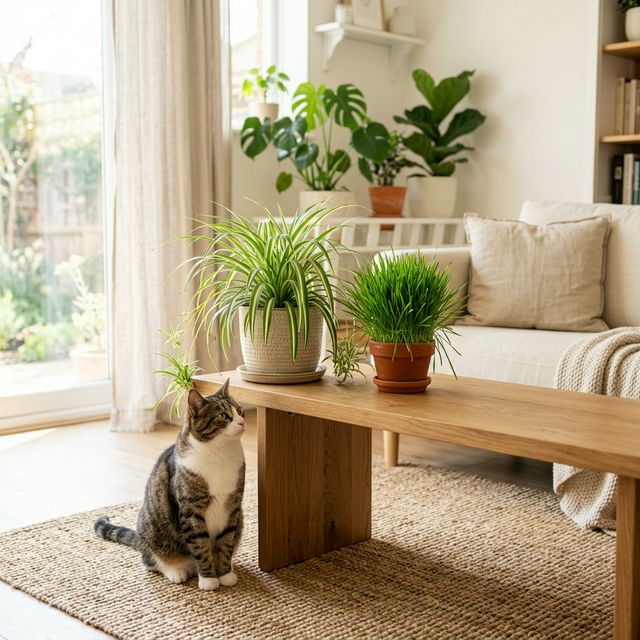
Sometimes your cat isn’t being “naughty” at all – they’re just bored, curious, or following that natural urge to nibble on something green. Instead of constantly telling them “no”, give them a little “yes” of their own.
Try growing a small pot of cat grass – like wheatgrass or oat grass – just for them. It becomes their special plant, something they can safely chew and enjoy. Not only does it satisfy their instincts, but it also gently steers their attention away from your beloved snake plant – so both you and your cat can be happy.
4. Choose peace of mind with cat-safe plants
If you find yourself worrying every time your cat wanders near the plant, it might be worth choosing something that lets you fully relax. You don’t have to give up on having a beautiful indoor garden – you just need plants that are safe for both of you.
Here are a few lovely, cat-friendly options:
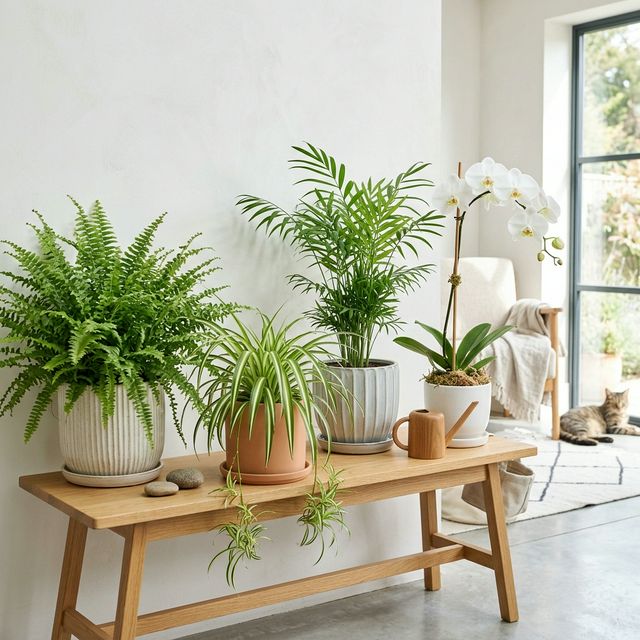
- Spider plants – easygoing and forgiving, perfect if you want something low-maintenance.
- Boston ferns – soft, lush, and full of life, they instantly make a space feel calm.
- Parlour palms – gentle, tropical vibes without any hidden risks.
- Orchids – delicate, elegant blooms that add beauty without worry.