
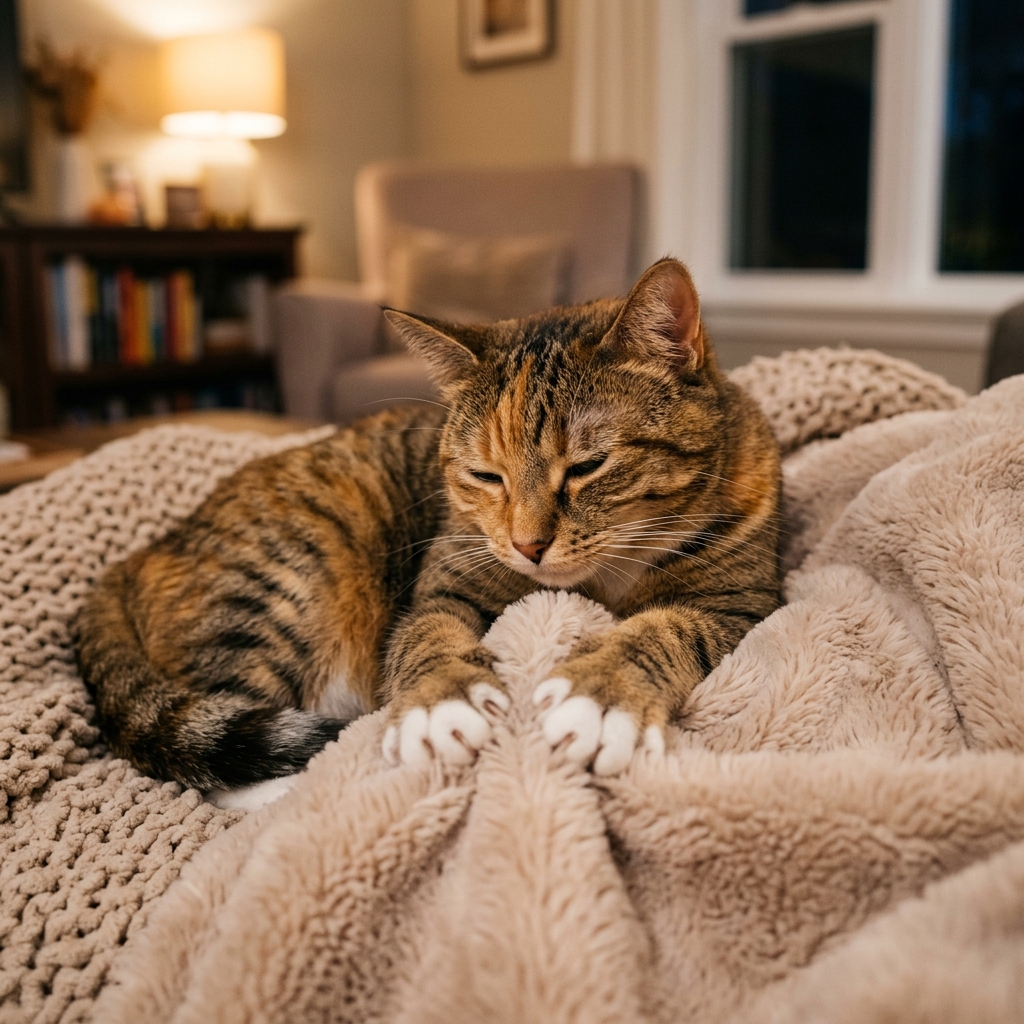
The rhythmic act of kneading is deeply rooted in feline neurobiology and evolution.
- Cats learn kneading as kittens and carry it into adulthood.
- Kneading helps them feel calm, relaxed, and safe.
- Cats use kneading to mark their territory with scent.
- The way they knead shows how they are feeling.
- Kneading is normal, but sudden changes may need a vet check.
What Is Kneading?
“Making biscuits” — the affectionate term cat owners use — refers to the rhythmic, alternating pushing motion cats make with their front paws against soft surfaces. Scientifically, this behavior is classified as feline pedal kneading, a form of repetitive motor pattern observed across all members of Felis catus and several other felid species.
The Neuroscience of Kneading
Central Pattern Generators and Rhythmic Motor Output
The rhythmic alternation of kneading is controlled by central pattern generators (CPGs) — neural circuits located in the lumbar and cervical segments of the spinal cord that produce repetitive motor outputs without requiring continuous cortical input. CPGs are well-characterized in locomotion research (Grillner, 2006, Nature Reviews Neuroscience), and the same fundamental circuits underpin kneading.
What makes feline kneading neurologically interesting is that it can be initiated voluntarily (a cat choosing to knead a blanket before lying down) but quickly transitions into a semi-autonomous pattern — the cat enters a self-reinforcing cycle where sensory feedback from the paw pads sustains the motor rhythm with minimal conscious effort. This is why kneading cats often appear “zoned out.”
The Endorphin-Oxytocin Feedback Loop
A 2019 study published in Applied Animal Behaviour Science (Vitale et al.) investigating feline social behavior found that affiliative interactions in cats — including behaviors like kneading — are associated with elevated levels of β-endorphins and oxytocin. These neurochemicals serve a dual purpose:
β-Endorphins bind to μ-opioid receptors in the periaqueductal gray (PAG) and ventral tegmental area (VTA), producing analgesia and a sense of well-being. This is the same neurochemical pathway activated during nursing in neonatal kittens.
Neurochemical Rewards
Oxytocin, released from the hypothalamic paraventricular nucleus, reinforces social bonding and down-regulates the hypothalamic-pituitary-adrenal (HPA) axis stress response.
In plain terms: kneading makes your cat feel genuinely good at a deep neurological level. The behavior is self-reinforcing — the act of kneading triggers chemical rewards that encourage more kneading. This is why cats often purr simultaneously; purring is also linked to parasympathetic nervous system activation and self-soothing.
Evolutionary Origins
Neonatal Nursing: Where It All Begins
Every kitten kneads. The behavior is observed within the first 24–48 hours of life and serves a clear survival function: alternating paw pressure on the queen’s mammary tissue stimulates the neuroendocrine milk ejection reflex. Specifically, mechanical stimulation of the nipple and surrounding tissue activates afferent sensory neurons that signal the hypothalamus(part of brain) to release oxytocin hormone from the posterior pituitary gland (also part of brain). Oxytocin hormone contracts myoepithelial cells surrounding mammalian alveoli(alveoli is simply sac like structure inside the breast), expelling milk into the ductal system.
A kitten that kneads more effectively gets more milk. This creates direct positive selection pressure for vigorous kneading behavior in neonates. (Kitten gets milk reward. )
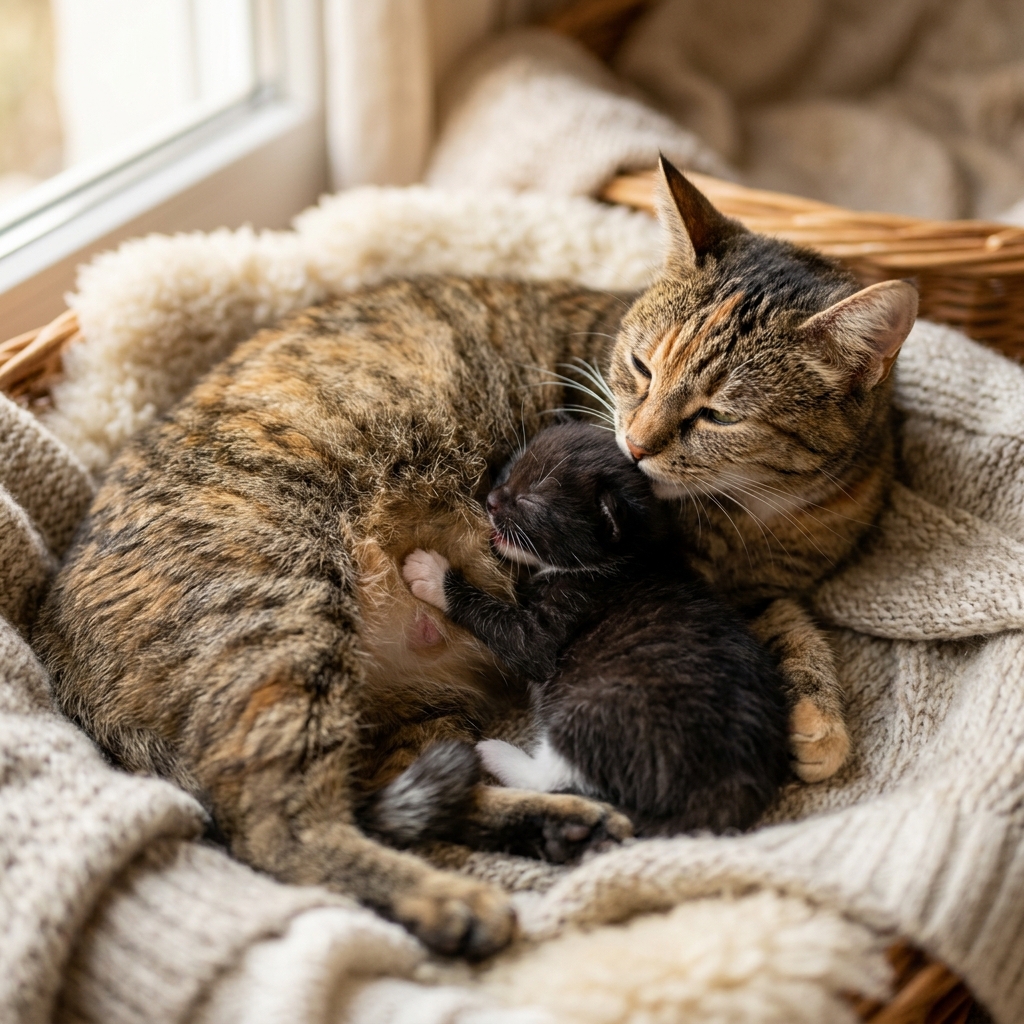
Neonatal nursing is where kneading begins, serving a critical survival function by stimulating milk flow.
Neoteny: The Retention of Juvenile Traits
So why do adult cats still knead, long after weaning? The answer lies in neoteny — the retention of juvenile characteristics into adulthood, a well-documented phenomenon in domesticated animals.
Domestication of Felis catus, which began approximately 10,000–12,000 years ago in the Fertile Crescent (Driscoll et al., 2007, Science), selected heavily for docility(calmness) and social tolerance — traits associated with juvenile behavioral profiles. As a result, domestic cats retain several kitten-like behaviors into adulthood that their wild counterparts (Felis silvestris lybica) largely abandon:
Source: Bradshaw, J.W.S., Casey, R.A., & Brown, S.L. (2012). The Behaviour of the Domestic Cat (2nd ed.). CABI Publishing.
Kneading in adult cats is essentially a behavioral fossil — a neonatal motor program that lost its original function (stimulating milk flow) but was preserved because it was co-opted by the brain’s reward circuitry.
Common Reasons Cats Knead
While the underlying neuroscience is consistent, the context of kneading reveals different motivations:
- Comfort and Contentment: The most common trigger. A cat kneading on your lap or a favorite blanket while purring is expressing peak relaxation. The limbic system is in a parasympathetic-dominant state — low cortisol, elevated endorphins, active vagal tone. This is the feline equivalent of a human sighing contentedly on a comfortable couch.
- Bonding and Social Attachment: Kneading on a human is functionally analogous to the neonatal nursing context (cat thinks that you as its mom): the cat associates the caregiver with safety, warmth, and physiological comfort — the same associations it had with its mother.
- Preparing a Resting Spot (Ancestral Nest-Building): Before lying down, many cats will knead the surface in a circular pattern. Even on a perfectly smooth bed, your indoor cat’s brain runs this ancestral subroutine. It’s a fixed action pattern (FAP) — a genetically encoded behavioral sequence that doesn’t require environmental relevance to execute.
- Stress Relief and Anxiety Management: This is analogous to humans biting nails, tapping feet, or fidgeting — repetitive motor behaviors that serve to down-regulate anxiety through sensory feedback loops.
How to Manage Kneading Behavior
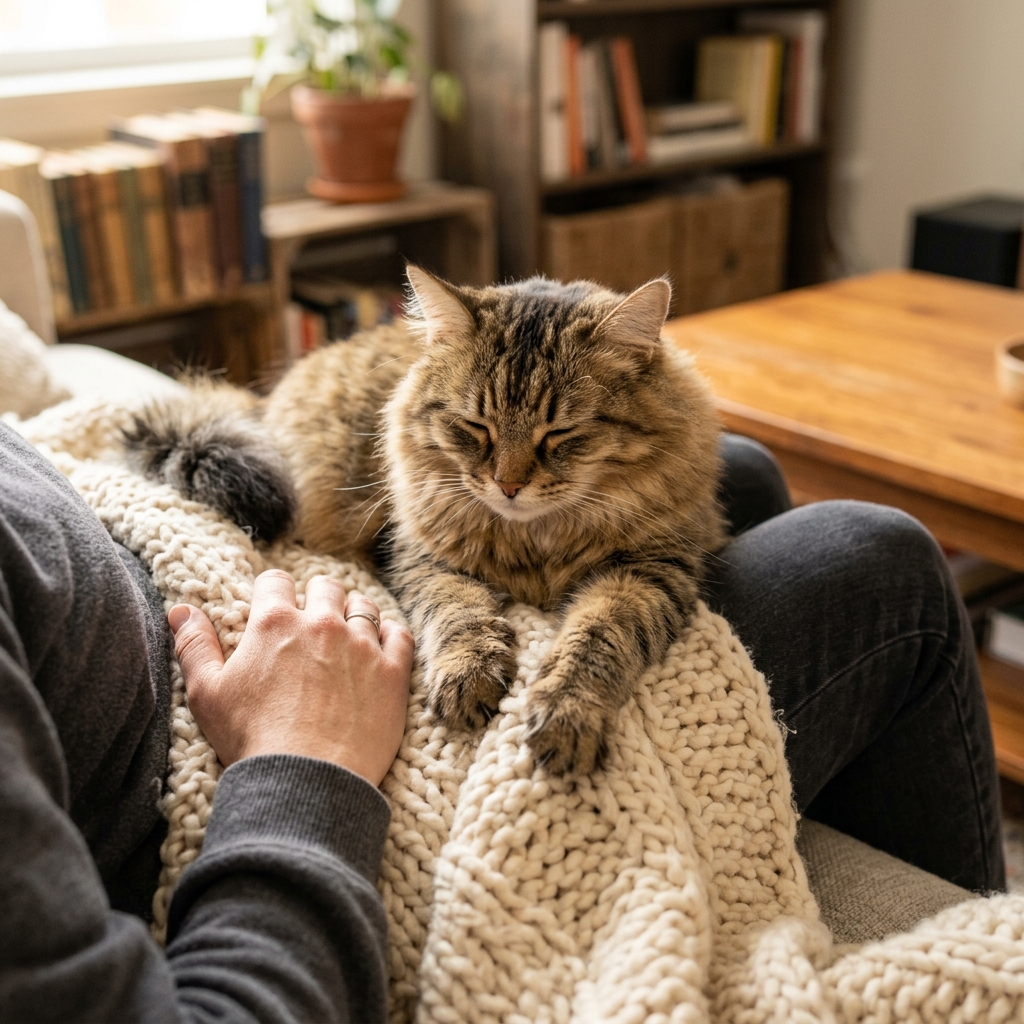
Kneading on a human is a peak sign of feline trust and social attachment.
01. If It’s Comfortable — Enjoy It
Kneading directed at you is one of the highest compliments in the feline behavioral repertoire. It means your cat categorizes you in the same emotional framework as its mother — maximum safety and comfort. If the kneading doesn’t bother you, let it continue. The cat is benefiting physiologically from the behavior.
02. If the Claws Are the Problem
Onychectomy involves amputation and causes chronic pain and behavioral issues. It is banned in many countries and several U.S. states.
If Kneading Is Destructive
Use these environmental strategies to protect your furniture:
- ● Redirect: Provide a designated surface, like a thick fleece blanket or plush pet bed.
- ● Enrichment: Ensure adequate play and interactive toys to reduce boredom-driven behavior.
- ● Feliway: Synthetic pheromones can reduce anxiety-driven behaviors significantly.
The Bottom Line
When your cat parks on your lap and starts making biscuits, they’re doing far more than moving their paws rhythmically. They’re executing a neurologically complex behavior rooted in neonatal survival instincts, modulated by central pattern generators, reinforced by endorphin-oxytocin feedback loops, and layered with pheromone-based territorial communication.
It’s one of the most elegant examples of behavioral neoteny in domesticated animals — a survival mechanism that lost its original function but was repurposed by the brain as a self-regulatory, stress-reducing, and social bonding tool.
In short: your cat is telling you, in the deepest language their neurobiology allows, that they feel safe with you.
That’s about as high a compliment as a 10,000-year-old apex predator can give. 🐾 🐾