
 Visualizing the treat: Strawberries are a nutrient-dense
- Nutritious treat. Strawberries are safe for dogs and packed with vitamins and antioxidants.
- Start small. Introduce gradually to avoid digestive upset.
- Follow the 10% rule. Treats should not exceed 10% of your dog’s daily calories.
- Wash thoroughly. Strawberries often have pesticide residue, so rinse well or choose organic.
- Adjust preparation. Slice for small dogs, serve whole or frozen for larger dogs.
What Makes Strawberries Safe for Dogs?
Strawberries (Fragaria × ananassa) are non-toxic to dogs, confirmed by both the ASPCA and the American Kennel Club (AKC). Unlike Grapes, which contain an unidentified nephrotoxin lethal to canines, Strawberries contain no compounds harmful to a dog’s renal or hepatic systems.
But “safe” and “beneficial” are two different things. Here’s where it gets interesting.
The Nutritional Science Behind Strawberries for Dogs
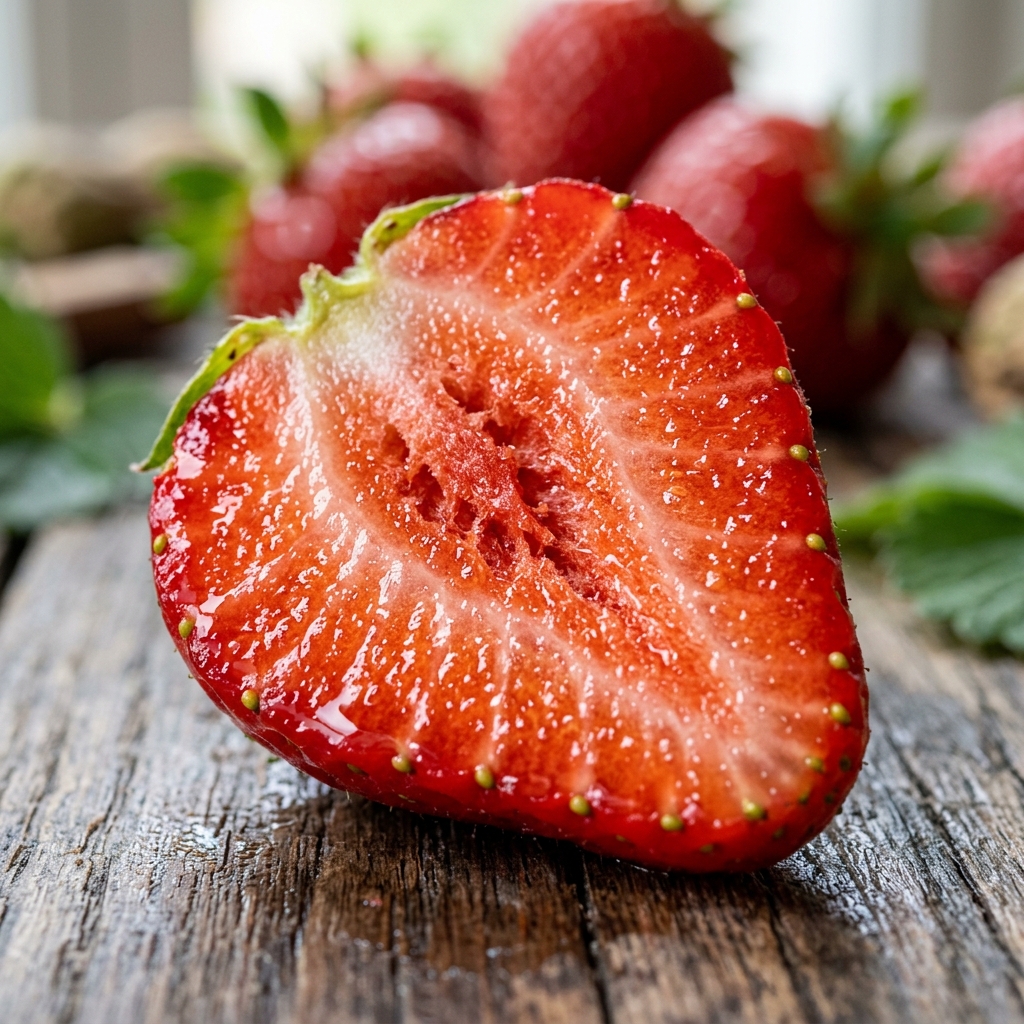 Fresh strawberries are packed with Vitamin C and powerful antioxidants.
One cup (approximately 152g) of raw strawberries contains:
Source: USDA FoodData Central (NDB No. 09316)
The Ellagic Acid Factor
Here’s something most pet blogs won’t tell you: strawberries are one of the richest dietary sources of ellagic acid, a polyphenol with documented anti-carcinogenic properties. A 2016 study published in the Journal of Agricultural and Food Chemistry found that ellagic acid inhibits tumor cell proliferation by inducing apoptosis (programmed cell death) in abnormal cells.
While canine-specific cancer research on ellagic acid is still limited, veterinary oncologists at Colorado State University’s Flint Animal Cancer Center have noted that dietary polyphenols show promising protective effects across mammalian species.
Fisetin: The Hidden Compound
Strawberries also contain fisetin, a flavonoid that has gained attention in longevity research. A landmark 2018 study from the University of Minnesota (published in EBioMedicine) demonstrated that fisetin acts as a senolytic – it selectively clears damaged, aging cells from tissue. In animal models, fisetin supplementation extended median lifespan by approximately 10%.
For senior dogs dealing with age-related inflammation or cognitive decline, the fisetin in strawberries could provide subtle but meaningful support.
How Much Is Too Much? Understanding Canine Sugar Metabolism
This is where many pet owners go wrong. Dogs metabolize fructose differently than humans. While our livers efficiently process fruit sugars, a dog’s digestive system is less adapted to high-sugar foods – a result of their evolutionary carnivorous ancestry.
The general veterinary guideline, endorsed by the AKC and PetMD, is the 10% treat rule: treats (including fruits) should make up no more than 10% of your dog’s daily caloric intake.
Treats should make up no more than 10% of your dog’s daily diet.
Exceeding these amounts regularly can contribute to obesity and, in predisposed breeds, increase the risk of diabetes mellitus. A 2020 study in The Veterinary Journal found that chronic excessive fructose intake in dogs correlated with insulin resistance markers similar to those seen in Type 2 diabetes in humans
Real Risks to Watch For
 Safe feeding: Always cut strawberries into bite-sized pieces, especially for small breeds.
- Choking Hazard: Whole strawberries can be a choking risk, especially for small breeds like Chihuahuas or Pomeranians. Always cut them into bite-sized pieces or mash them.
- Allergic Reactions: Though rare, some dogs can be allergic to strawberries. Signs include facial swelling, hives, excessive itching, or gastrointestinal distress. Contact your vet if these appear after first feeding.
- Pesticide Residue: Strawberries often appear on the EWG’s Dirty Dozen list. Wash thoroughly or choose organic to reduce exposure, especially for small dogs.
- Avoid Artificial Strawberry Products: Yogurt, jams, ice cream, and candy may contain xylitol, which is extremely toxic. Stick to fresh, plain strawberries only.
Best Ways to Serve Strawberries to Your Dog
- Fresh and Sliced: The simplest and safest method.
- Frozen Treats: Blend strawberries with plain yogurt (no xylitol) and freeze in silicone molds. Perfect for summer.
- Mashed Topper: Mash a couple of strawberries over your dog’s regular kibble for a flavor and nutrient boost.
- Training Rewards: Small strawberry pieces work as low-calorie, high-value training treats.
The Bottom Line
Strawberries aren’t just safe for dogs — when served properly, they’re a nutrient-dense, antioxidant-rich treat backed by real science. Stick to the serving guidelines, always use fresh berries, and introduce them gradually.
Your dog’s tail wag will tell you the rest. 🐾